My name is Ariele. My program is Pure and applied Sciences. I would like to pursue my studies at the University in biology. Biology is the study of living organisms, divided into many specialized fields that cover their morphology, physiology, anatomy, behavior, origin, and distribution. Biologists usually work on research sites. Biologists' tasks are various. They can try to explain the evolution of life, develop new technologies, help animals to adapt in their environment, study a new pathogen, etc. I made a glossary with twenty words related to that science. I hope this glossary will help people who are studying this field.
asexual
adjective
Not involving the fusion of gametes.
Example: Sharks are an example of asexual reproduction.
fr: asexué
bacteria
noun
A member of a large group of unicellular microorganisms which have cell walls but lack organelles and an organized nucleus, including some that can cause disease.
Example: Bacteria can cause infections.
fr: bactérie
biologist
noun
An expert in or student of the branch of science concerning living organisms.
Example: These biologists helped a bear to find its baby.
fr: biologiste
cell
noun
The smallest structural and functional unit of an organism, typically microscopic and consisting of cytoplasm and a nucleus enclosed in a membrane. Microscopic organisms typically consist of a single cell, which is either eukaryotic or prokaryotic.
Example: Both of these processes occur continuously during the interphase period of the cell cycle, showing quite a high degree of semi-autonomy.
fr: cellule
chromosome
noun
A chromosome is a part of a cell in an animal or plant. It contains genes which determine what characteristics the animal or plant will have.
Example: The human genome contains about 500 to 750 genes encoding odourant receptors, which are found in gene clusters containing up to 80 genes on every chromosome.
fr: chromosome
clone
noun
Cloning is a technique scientists use to make exact genetic copies of living things.
Example: The first clone in the world is Dolly the sheep.
fr: clone
disease
noun
A disorder of structure or function in a human, animal, or plant, especially one that produces specific signs or symptoms or that affects a specific location and is not simply a direct result of physical injury.
Example: There are multiple causes of enteric diseases.
fr: maladie
ecosystem
noun
A biological community of interacting organisms and their physical environment.
Example: Big changes reduced the stability of the ecosystem.
fr: écosystème
evolution
noun
It is the change in the heritable characteristics of biological populations over successive generations.
Example: Evolution allows species to adapt to changes.
fr: évolution
fission
noun
The splitting of a unicellular organism into two or more separate daughter cells.
Example: They replicate through binary fission.
fr: scissiparité
fossil
noun
The remains or impression of a prehistoric organism preserved in petrified form or as a mold or cast in rock.
Example: Fossils are a proof of the species' evolution.
fr: fossile
gamete
noun
A gamete is the male or female reproductive cell that contains half the genetic material of the organism.
Example: In fertility clinics, professionals extract gametes.
fr: gamète
heredity
noun
The passing on of physical or mental characteristics genetically from one generation to another.
Example: It is the gene, the unit of heredity.
fr: hérédité
karyotype
noun
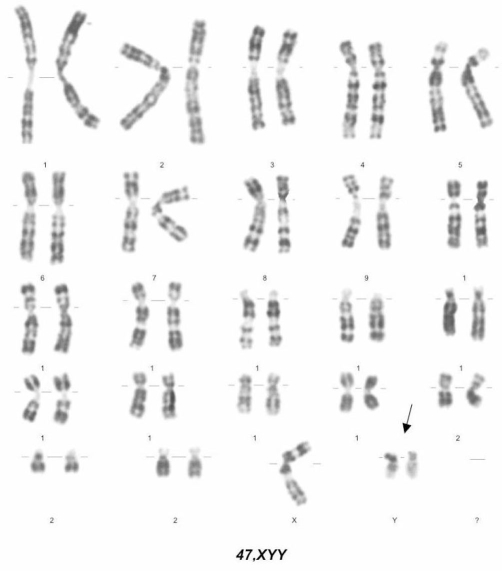
The number and visual appearance of the chromosomes in the cell nuclei of an organism or species.
Example: One principal component of this study is the analysis of the target taxon's karyotype.
fr: caryotype
organelle
noun
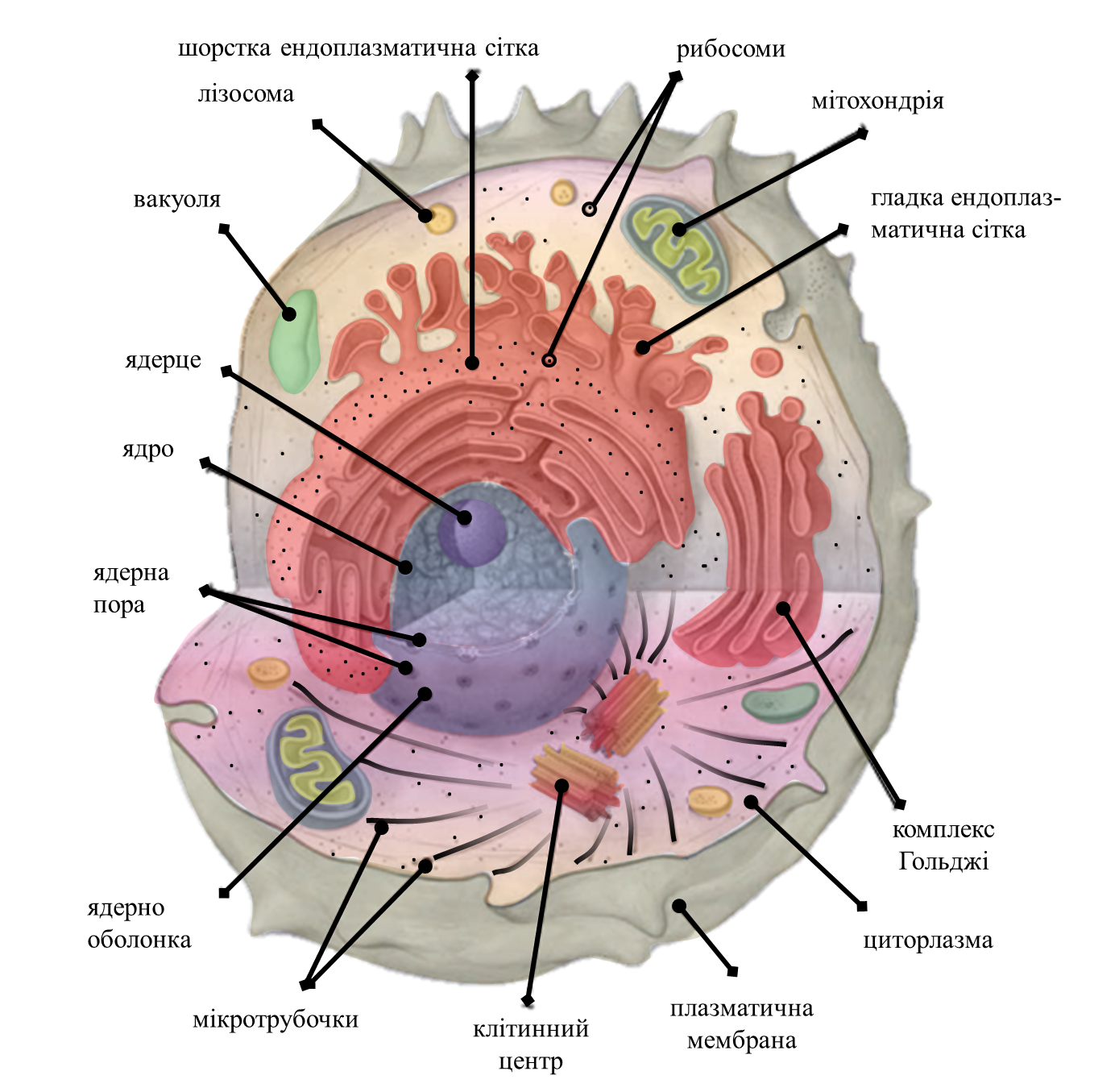
An organelle is a specialized subunit, usually within a cell, that has a specific function.
Example: A ribosome is an organelle.
fr: organite
osmosis
noun
A process by which molecules of a solvent tend to pass through a semipermeable membrane from a less concentrated solution into a more concentrated one.
Example: Eating salty food make us thirsty because of the osmosis process.
fr: osmose
protein
noun
Any of a class of nitrogenous organic compounds that consist of large molecules composed of one or more long chains of amino acids and are an essential part of all living organisms.
Example: Proteins are long molecular chains.
fr: protéine
specie
noun
Group of organisms that can reproduce with one another in nature and produce fertile offspring.
Example: Darwin proved the common origin of species and the affinity between the human specie and the other species in 'The origin of species' published in 1859.
fr: espèce
tumor
noun
An abnormal mass of tissue that forms when cells grow and divide more than they should or do not die when they should.
Example: These oestrogenic chemicals therefore have the ability to promote the growth of cells in a tumor.
fr: tumeur
zygote
noun
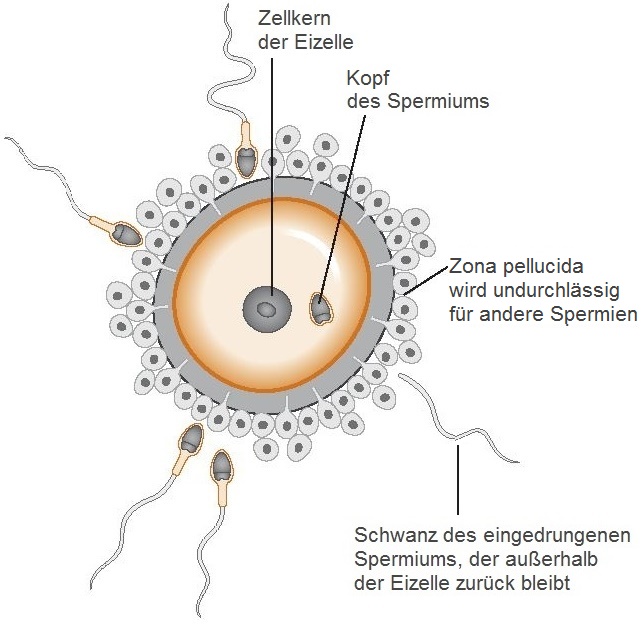
Fertilized egg cell that results from the union of a female gamete (egg, or ovum) with a male gamete (sperm).
Example: The zygote is the first formed cell of a living.




:max_bytes(150000):strip_icc():format(webp)/protein-hemoglobin-58a222955f9b58819ca8f902.jpg)